Sweat calculator
Weigh yourself before and after training. We work out how much you sweat per hour, how much sodium you lose and how much to drink on race day.
Your measurement
Your sweat rate
– l per hour
Body mass loss
–
Total sweat
–
Sodium loss
–
What it means for your race
Fluid
–
Sodium
–
Fluid and electrolytes in one
If you want to drink something with electrolytes on long sessions or races, have a look at our ionic drink.
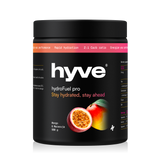
hydroFuel pro699 Kč
How to weigh yourself properly
A few simple rules so the result makes sense.
- 1Before training, empty your bladder and weigh yourself naked or in underwear only.
- 2Weigh your bottle before and after training so you know how much you drank. 1 g equals 1 ml.
- 3After training, towel dry and weigh yourself again in the same clothes as at the start.
- 4If you went to the toilet during training, note an estimate of about 0.3 l per visit.
- 5Test in race-like conditions and repeat the measurement at different paces and in different weather.
How we calculate
- Sweat rate
- (weight before − weight after + fluid drunk − urine) / training duration. 1 kg of loss equals 1 l of sweat. Baker 2017, table 3
- Sodium loss
- sweat rate × sweat sodium (mmol/l) × 23 mg. Without a test, the average for athletes in your sport. Barnes et al. 2019, tables 2 and 3
- Fluid for the race
- at least (sweat over the race − 2% of body mass) / race duration, at most as much as you sweat. McCubbin 2025, equation 3
- Sodium for the race
- to taste for races up to 4 hours; for longer ones based on sweat rate, share of fluid replaced and sweat sodium. McCubbin 2025, figure 3
The result is a rough estimate for healthy athletes, not medical advice. Body mass loss also includes some fuel burned (up to about 0.5 kg in sessions over 2 hours), so your sweat rate may come out slightly high. Sweating changes with weather, pace and acclimatisation. The calculator sends nothing, everything is calculated in your browser only.
Electrolytes in sport: what exactly are they and how many does the body really need?
Sources
- Baker LB (2017). Sweating rate and sweat sodium concentration in athletes. Sports Medicine 47 (Suppl 1): S111–S128.
- Barnes KA et al. (2019). Normative data for sweating rate, sweat sodium concentration, and sweat sodium loss in athletes. Journal of Sports Sciences 37 (20): 2356–2366.
- McCubbin AJ (2025). Sodium intake for athletes before, during and after exercise. Performance Nutrition 1: 11.
- Jeukendrup A. How much do you sweat? mysportscience.com