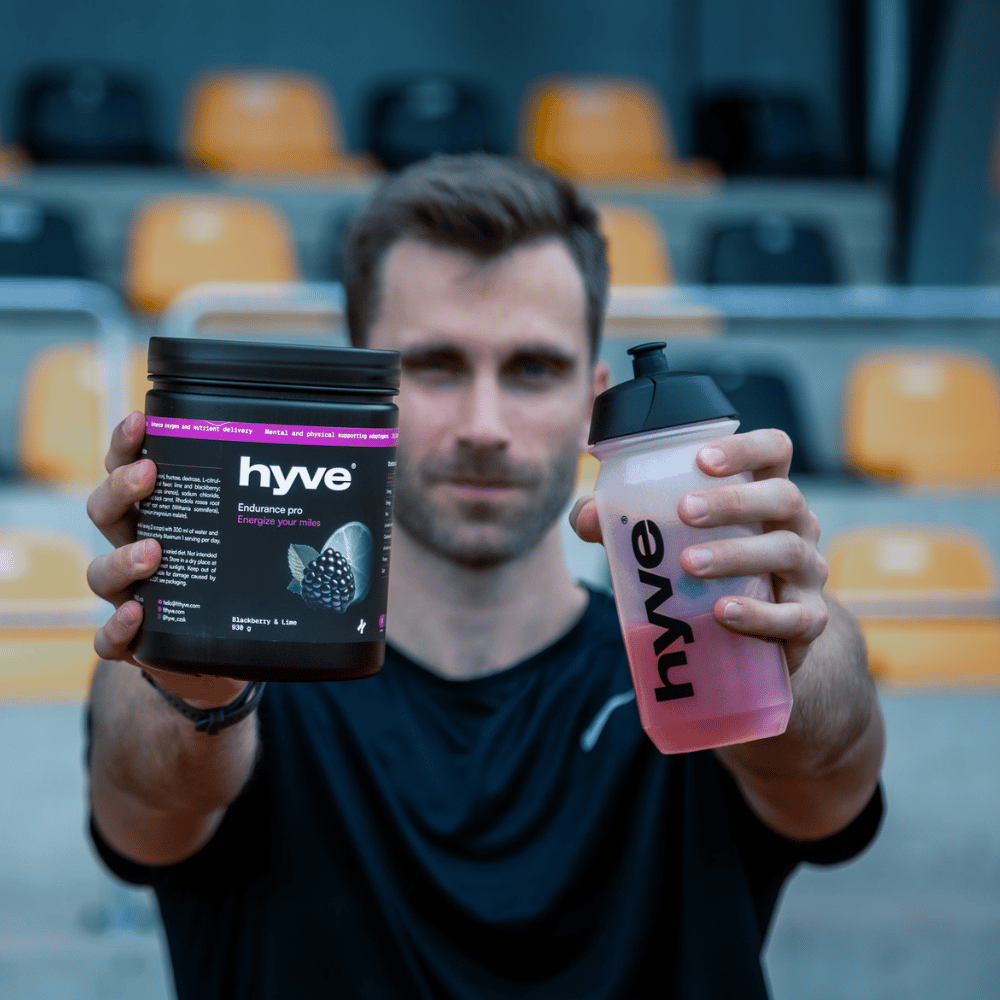
Endurance pro isn’t just another food supplement. It’s sports nutrition backed by hard data and developed in collaboration with athletes themselves.
Dual carbohydrate source: glucose and fructose in a 2:1 ratio
Combining glucose and fructose in a 2:1 ratio maximises carbohydrate absorption and increases energy use by up to 50% compared with glucose alone. This ratio also minimises digestive problems. It’s the ideal choice for an intake of 60–90 g of carbohydrates per hour during endurance exercise lasting more than 2 hours or during repeated intense exercise, such as a half marathon, marathon, triathlon or cycling.
What the studies say: Research (e.g. Jentjens et al., 2004) has shown that a mixture of glucose and fructose increases the oxidation rate of ingested carbohydrates by a massive 75% (up to 1.75 g/min) compared with glucose alone. Subsequent performance studies (Currell and Jeukendrup, 2008) also confirmed that this combination not only reduces the subjective rating of perceived exertion (RPE), but leads to significantly better times in endurance time trials in direct comparison with the same amount of isolated glucose.
L-Citrulline
L-citrulline supplementation is the most effective way to raise plasma L-arginine levels, and with greater efficiency than taking arginine itself. Increased arginine availability stimulates the enzyme endothelial nitric oxide synthase (eNOS) to produce large amounts of nitric oxide (NO). NO acts as a powerful vasodilator – it widens the blood vessels, maximising microcirculation and oxygen delivery to working muscles, while actually reducing the oxygen cost of muscle contraction. Citrulline also suppresses hyperammonaemia (an excessive build-up of ammonia, which slows down energy metabolism). Ideally, supplement L-citrulline at a dose of 3.4–6 g a day for at least 6–16 days before exercise, which, according to the data, brings a significant improvement in endurance capacity.
What the studies say: A large meta-analysis of ten independent studies (Viribay et al., 2022) showed that taking 3.4 to 6.0 g of citrulline a day clearly leads to improved aerobic performance compared with placebo. Other studies in trained cyclists recorded improved times and reduced perception of muscle fatigue in high-intensity tests after supplementation with 6 g of citrulline. In endurance sports, even a small percentage improvement makes a huge difference in the home straight.
Caffeine
Caffeine blocks fatigue receptors in the brain and directly stimulates muscle contraction. But Endurance pro doesn’t contain it just for focus – it’s also there because of the so-called additive effect, where ingredients work better together than on their own.
What the studies say: Meta-analyses (Christensen et al., 2017) consistently show that caffeine alone delivers an average 1% speed improvement in high-intensity efforts compared with placebo, which decides races at elite level. The most important finding, however, came from the study by Yeo et al. (2005), which found that taking caffeine and carbohydrates together increases the oxidation rate of those carbohydrates by a further 26%. This advantage was subsequently confirmed by the meta-analysis by Conger et al. (2011), which concluded that combining caffeine and carbohydrates provides a small but demonstrably greater and statistically significant performance bonus compared with carbohydrate intake alone.