Creatine and its effect on the brain: cognitive function and recovery after brain injury
Most of us associate creatine monohydrate with building muscle mass, increasing strength and explosiveness. Recently, however, it has also been receiving attention in the area of brain function. A growing body of scientific evidence shows that this supplement may have a fundamental influence on our cognitive function, memory and recovery after a head injury.
Contents4 chapters
Most of us associate creatine monohydrate with building muscle mass, gains in strength and explosiveness. Recently, however, it has also been getting attention in the area of brain function. More and more scientific evidence shows that this supplement may have a fundamental effect on our cognitive function, memory and recovery after a head injury (Forbes et al., 2022; Rae and Bröer, 2015).
How creatine supplies the brain with energy
Our brain has an enormous energy consumption. Although it makes up only a small part of body weight, it is responsible for roughly 20 % of basal energy expenditure. Like skeletal muscle, the brain also relies on creatine and phosphocreatine when energy demands are high, and makes ATP from them very quickly.
By taking creatine in supplement form we demonstrably increase its level directly in the brain. New research moreover suggests that creatine may also work as a neurotransmitter in the central nervous system (Bian et al., 2023).
Memory, concentration and performance under pressure
Of the 16 studies examined, 13 confirmed an improvement in various aspects of cognitive processes. Creatine appears to be particularly effective when the brain is under pressure:
Concussion and recovery from injury
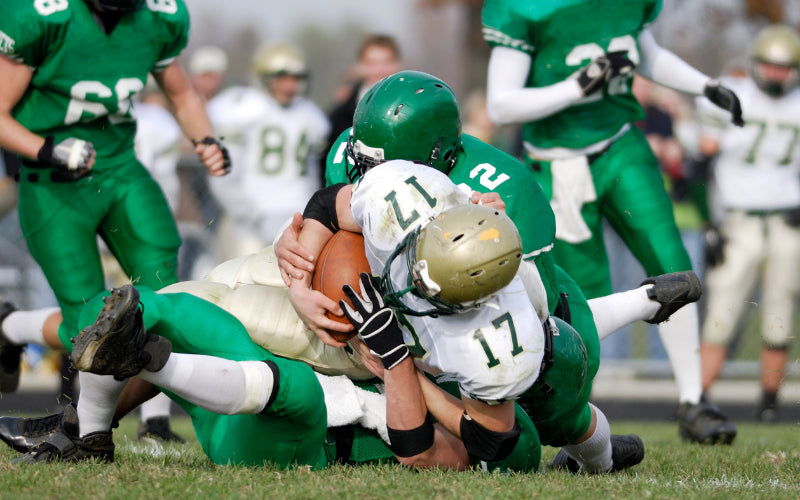
Another possible benefit is the role creatine may play in easing the consequences of, and supporting recovery from, a mild traumatic brain injury (mTBI) such as concussion.
Summary for athletes
Creatine does not have to be a food supplement just for improving sports performance. It can give the brain an important store of fast energy, help you stay focused even when tired and, if you do riskier sports, it may work as an effective emergency brake and a booster of recovery in the event of a head injury.
- Roschel H, Gualano B, Ostojic SM, Rawson ES. (2021). Creatine supplementation and brain health. Nutrients, 13(2):586.
- Dolan E, Gualano B, Rawson ES. (2019). Beyond muscle: the effects of creatine supplementation on brain creatine, cognitive processing, and traumatic brain injury. Eur J Sport Sci, 19(1):1–14.
- Avgerinos KI, Spyrou N, Bougioukas KI, Kapogiannis D. (2018). Effects of creatine supplementation on cognitive function of healthy individuals: A systematic review of randomized controlled trials. Exp Gerontol, 108:166–173.
- Forbes SC, Cordingley DM, Cornish SM, et al. (2022). Effects of creatine supplementation on brain function and health. Nutrients, 14(5):921.
- Bian X, Zhu J, Jia X, et al. (2023). Evidence suggesting creatine as a new central neurotransmitter. eLife, 12:RP89317.
- Rae CD, Bröer S. (2015). Creatine as a booster for human brain function. How might it work? Neurochem Int, 89:249–259.
- Jeukendrup A, Gleeson M. (2025). Sport nutrition (4th ed.). Human Kinetics.
Enjoyed the article? Send it to a friend who will find it useful.
Comments
No comments yet. Be the first.